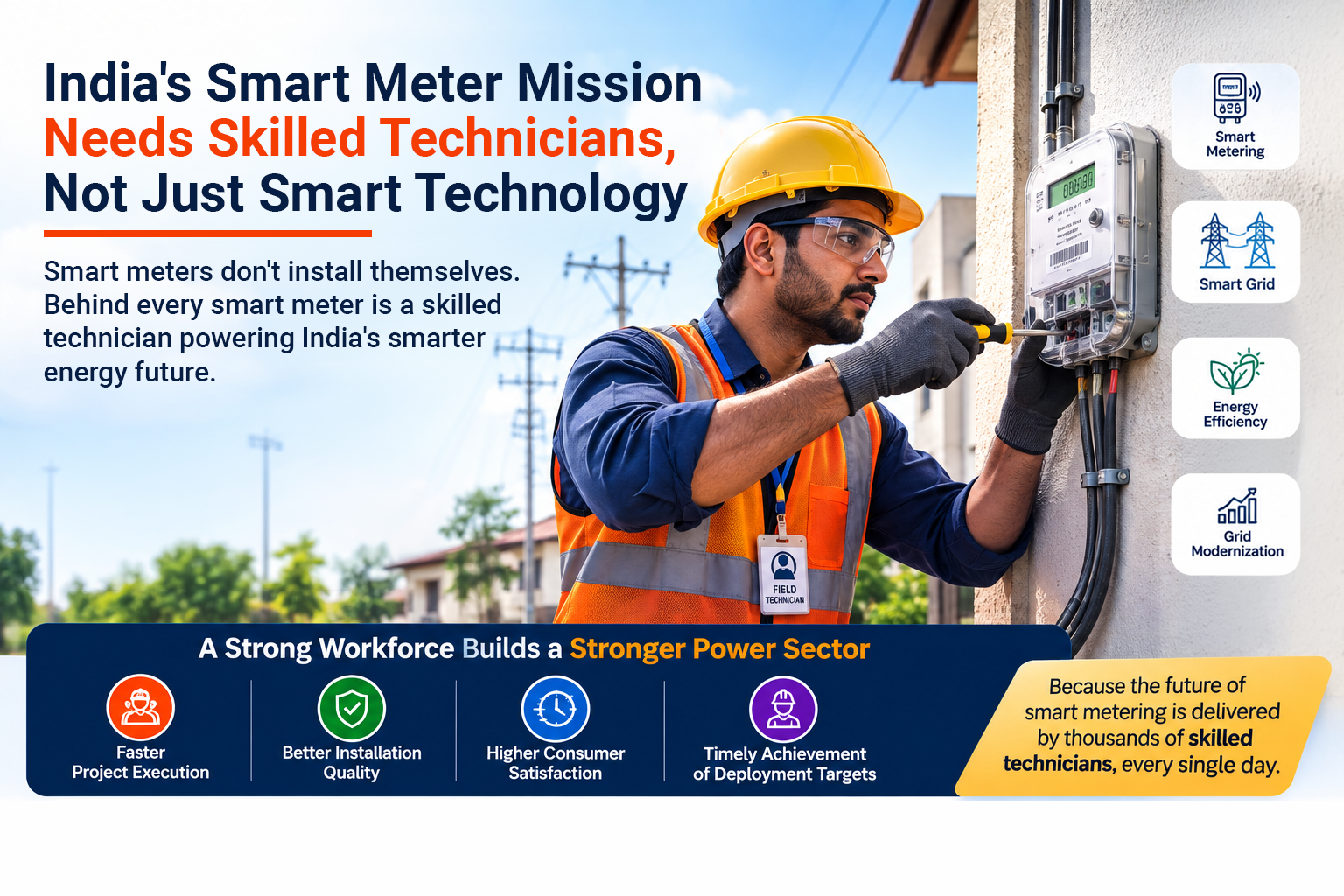
Indian Smart Meter Mission is transforming the country’s power distribution network. Advanced Metering Infrastructure (AMI), IoT-enabled smart meters, real-time energy monitoring, and grid modernization are reshaping the future of the power sector.
However, while discussions often focus on technology, software, and infrastructure, one critical factor is frequently overlooked—the workforce responsible for implementing these projects.
A recent conversation with a project manager leading an AMI deployment highlighted this reality.
He wasn’t concerned about the availability of smart meters.
He wasn’t worried about the technology.
He wasn’t waiting for project approvals.
Instead, he said:
“We have the project. We have the targets. What we don’t have is enough trained technicians to install thousands of meters on time.”
That statement perfectly captures one of the biggest challenges facing India’s Smart Meter Mission today.
Technology Alone Doesn’t Complete Smart Meter Projects
Smart meters may be intelligent devices, but they don’t install themselves.
Every successful AMI deployment depends on thousands of skilled field technicians who ensure that installations are completed safely, accurately, and on schedule.
Each installation requires professionals who can:
- Install smart meters correctly.
- Follow electrical safety protocols.
- Configure and test devices.
- Resolve on-site technical issues.
- Communicate effectively with consumers.
- Maintain installation quality and compliance.
- Complete work efficiently within project timelines.
Without a deployment-ready workforce, even the most advanced technology cannot achieve its intended impact.
The Growing Workforce Challenge in AMI Projects
As smart meter rollouts expand across multiple states, utility companies and implementation partners are experiencing a new challenge—not technology, but workforce availability.
Large-scale deployments require thousands of technicians to work simultaneously across cities, towns, and remote villages.
Recruitment teams often struggle to:
- Find trained smart meter technicians.
- Hire candidates quickly for project deadlines.
- Deploy technicians across multiple locations.
- Replace technicians who leave during project execution.
- Maintain consistent installation quality.
A single vacant technician position may appear insignificant, but across a large deployment, multiple vacancies can delay project milestones and increase operational costs.
Why Skilled Field Technicians Are Critical
Every technician directly influences project success.
Their responsibilities go beyond installation.
They represent the company at the consumer’s doorstep, ensure proper installation practices, resolve basic customer concerns, and help maintain trust throughout the deployment process.
A well-trained technician contributes to:
- Faster installation rates.
- Higher first-time installation success.
- Better consumer experience.
- Improved safety compliance.
- Reduced rework.
- Timely project completion.
In large AMI projects, workforce quality often becomes a competitive advantage.
Workforce Planning Is Now a Business Priority
Traditionally, hiring field technicians was considered an HR function.
Today, it has become a strategic business priority.
Project timelines, customer satisfaction, operational efficiency, and contract performance increasingly depend on having the right workforce available at the right time.
Organizations that invest in workforce planning are better positioned to:
- Meet deployment targets.
- Reduce hiring delays.
- Improve technician retention.
- Scale projects faster.
- Maintain consistent installation quality.
The future of smart metering requires not only smarter technology but also smarter workforce strategies.
Building a Deployment-Ready Talent Pipeline
To support the growing demand for smart meter installations, companies need to build a continuous pipeline of skilled professionals rather than hiring only after projects begin.
Effective workforce strategies include:
1. Regional Talent Sourcing
Recruit technicians from locations near deployment sites to reduce relocation challenges and improve joining rates.
2. Continuous Skill Development
Partner with ITIs, polytechnics, and training institutes to prepare technicians for AMI installation, safety standards, and field operations.
3. Verified Workforce
Deploy candidates whose skills, documents, and experience have been properly verified to improve quality and reduce project risks.
4. Faster Hiring Processes
Use digital recruitment platforms to identify, screen, and deploy technicians quickly as project requirements evolve.
How ShramIN Supports Smart Meter Hiring
At ShramIN, we work with organizations across the Power, Utility, Smart Meter, Installation, Renewable Energy, and Infrastructure sectors to help them hire skilled field professionals at scale.
Our platform connects employers with verified ITI, Diploma, and skilled technicians, enabling faster recruitment and more efficient workforce deployment.
By combining regional sourcing, verified talent, and technology-enabled recruitment, we help organizations reduce hiring delays and strengthen project execution.
For project-based industries, having access to the right workforce at the right time is just as important as having the right technology.
The Future of India’s Smart Meter Mission
India’s Smart Meter Mission will undoubtedly be driven by innovation, digital technologies, and intelligent infrastructure.
But its success will ultimately depend on the thousands of technicians working every day in homes, businesses, and communities across the country.
Every smart meter installed is the result of skilled hands, technical expertise, and dedicated field operations.
As the power sector continues its digital transformation, organizations that prioritize workforce planning alongside technology investments will be best positioned to deliver successful projects.
Because sometimes, the biggest challenge isn’t building smarter infrastructure.
It’s building the skilled workforce that makes it possible.
Conclusion
The Smart Meter Mission is more than a technology initiative-it’s a people-driven transformation.
Success depends not only on smart devices and digital platforms but also on the availability of trained, verified, and deployment-ready technicians.
By investing in workforce development, regional hiring, and efficient recruitment strategies, organizations can accelerate project execution and achieve long-term operational success.
At ShramIN, we believe that building India’s energy infrastructure starts with building India’s skilled workforce.
Frequently Asked Questions (FAQs)
Why is hiring skilled technicians important for Smart Meter projects?
Skilled technicians ensure safe, accurate, and timely installations while maintaining quality standards and delivering a positive consumer experience.
What are the biggest workforce challenges in AMI deployment?
Common challenges include technician shortages, rapid hiring needs, workforce retention, deployment across multiple locations, and maintaining installation quality.
How can utility companies improve Smart Meter hiring?
Companies can strengthen regional recruitment, build partnerships with technical institutes, maintain a verified talent pipeline, and use digital hiring platforms for faster recruitment.
How does ShramIN help Smart Meter companies?
ShramIN connects employers with verified ITI, Diploma, and skilled field technicians, helping organizations hire faster, improve deployment readiness, and support large-scale AMI projects across India.